Why Is My Stomach Swollen? Could It Be a Liver Problem?
Introduction
You wake up one morning and notice your stomach looks puffier than usual. Your waistband feels tighter. Maybe there is a heaviness in your belly that was not there a few weeks ago. You tell yourself it is probably just bloating something you ate, perhaps. But when it does not go away after a few days, the question starts nagging: could something else be going on?
A swollen stomach is one of those symptoms that gets brushed aside far too often. And while most of the time it is completely harmless, there are situations where it is the body’s way of asking for attention. One of those situations involves the liver.
This article is here to help you understand what a swollen stomach might mean, when the liver could be involved, and what you can do about it without unnecessary panic.
Bloating vs. True Abdominal Swelling: There Is a Difference
Before jumping to conclusions, it helps to understand what kind of swelling you are actually dealing with.
Bloating is that familiar feeling of fullness and tightness usually caused by gas, certain foods, or digestive issues. It tends to come and go throughout the day and often improves after passing gas or having a bowel movement. Almost everyone experiences this at some point.
Abdominal distension, the medical term for true stomach swelling, is different. The abdomen actually increases in size and stays that way. It does not come and go with meals. The belly may feel firm, tight, or heavy, and clothing that used to fit comfortably no longer does.
If your stomach has been visibly larger for more than a week or two, and it is not going up and down like typical bloating, that is worth paying attention to.
What Could Be Causing a Persistently Swollen Stomach?
There are several possible explanations, and liver disease is just one of them.
Irritable Bowel Syndrome (IBS) and Digestive Issues
IBS is one of the most common causes of a persistently bloated or swollen-looking abdomen. It is a condition where the digestive system becomes sensitive and overreactive, leading to bloating, cramping, and irregular bowel habits. It is uncomfortable but not dangerous.
Weight Gain or Fat Around the Abdomen
Gradual weight gain, especially fat that settles around the midsection, can cause the stomach to appear swollen over time. This is often linked to diet, a sedentary lifestyle, hormonal changes, or conditions like insulin resistance.
Ovarian Cysts or Uterine Fibroids
In women, swelling in the lower abdomen can sometimes be related to ovarian cysts or fibroids, non-cancerous growths in the uterus. These can cause noticeable abdominal fullness and discomfort.
Ascites When the Liver Is Involved
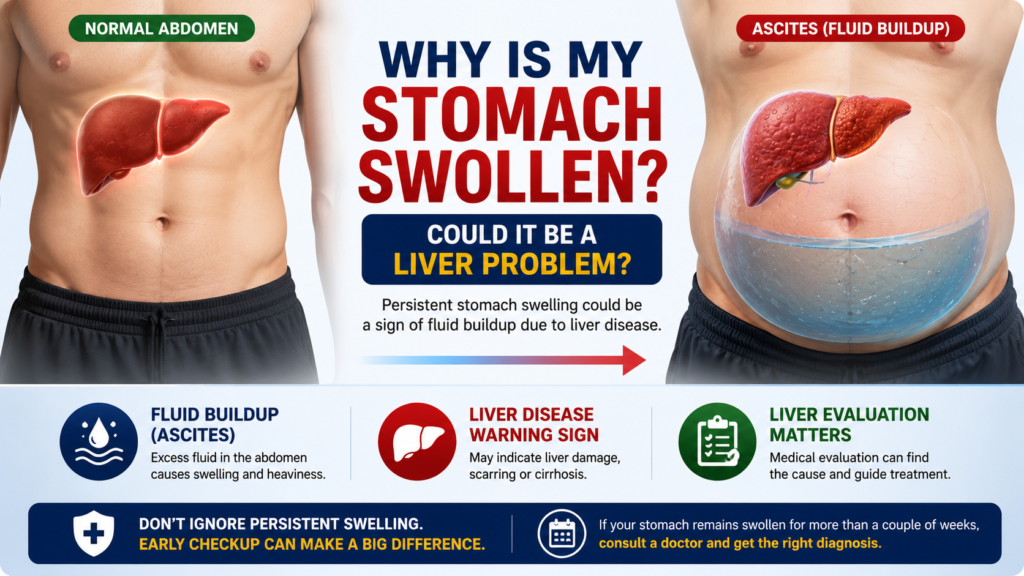
This is where the liver connection becomes important. Ascites is the medical term for a buildup of fluid inside the abdominal cavity. When this happens, the stomach can swell significantly, sometimes enough to look visibly distended and feel tight to the touch.
Ascites is one of the most telling signs that the liver may not be functioning as it should.
Why Does Liver Disease Cause Fluid Buildup?
The liver plays a central role in regulating the body’s fluid balance. It produces a protein called albumin, which helps keep fluid inside blood vessels where it belongs. When the liver is damaged or scarred, a condition known as cirrhosis, it struggles to produce enough albumin. As a result, fluid leaks out of the blood vessels and collects in the abdominal cavity.
At the same time, liver disease can increase pressure in the blood vessels surrounding the liver (a condition called portal hypertension). This added pressure pushes even more fluid into the abdominal space.
The result is a stomach that grows larger, feels heavy, and does not respond to dietary changes or exercise.
Other Symptoms That May Appear Alongside Liver-Related Swelling
Ascites rarely shows up alone. If the liver is behind the swelling, there are usually other signs present too:
- Yellowing of the skin or eyes is one of the most recognizable signs of liver trouble
- Dark urine that looks tea-colored or brown
- Pale or clay-colored stools
- Persistent fatigue that feels bone-deep and does not improve with sleep
- Loss of appetite and unintended weight loss
- Nausea without an obvious cause
- Easy bruising from minor bumps or pressure
- Swelling in the legs and ankles, caused by the same fluid retention affecting the belly
If several of these are happening at the same time as your stomach swelling, it is important to see a doctor rather than wait and see.
Conditions That Can Lead to Ascites
Liver-related fluid buildup does not happen overnight. It is usually the result of long-standing liver disease. The most common causes include:
- Alcoholic liver disease: years of heavy drinking, gradually scar and damage the liver
- Non-alcoholic fatty liver disease (NAFLD) fat accumulation in the liver, often linked to obesity and diabetes, that can progress to serious scarring over time
- Chronic hepatitis B or C: viral infections that, when left untreated, can slowly damage liver tissue over many years
- Liver cancer: tumors in the liver can disrupt normal function and contribute to fluid buildup
- Heart failure: in some cases, fluid accumulation is related to the heart rather than the liver, which is why proper diagnosis is essential
Listen to What Your Body Is Telling You
A swollen stomach is not always serious. But it is always worth understanding. The body rarely makes noise without a reason, and persistent abdominal swelling, especially when accompanied by fatigue, yellowing of the skin, or changes in urine color, deserves a proper medical evaluation.
Catching liver disease early gives you real options. Ignoring it until the swelling becomes uncomfortable or other complications develop takes those options away.
If your stomach has been swollen for more than a couple of weeks and you are not sure why, make an appointment. Specialists like Dr. Mayur Patel, an experienced Liver Surgeon, see patients with these exact concerns every day and can help you get clear answers and a path forward.
Do not wait for the symptoms to get louder. Your liver has been working quietly on your behalf for years, it deserves the same consideration in return.