
Could Vomiting Blood Be a Sign of Liver Failure?
Introduction
If you or someone you know has ever vomited blood, you already know how frightening that moment feels. It’s the kind of symptom that makes you want answers immediately, and one question that often comes up is whether it points to liver failure.
The honest answer? Sometimes, yes. But not always. Let’s break this down in plain language so you know what’s actually going on and when it’s time to see a doctor.
What Does Vomiting Blood Actually Mean?
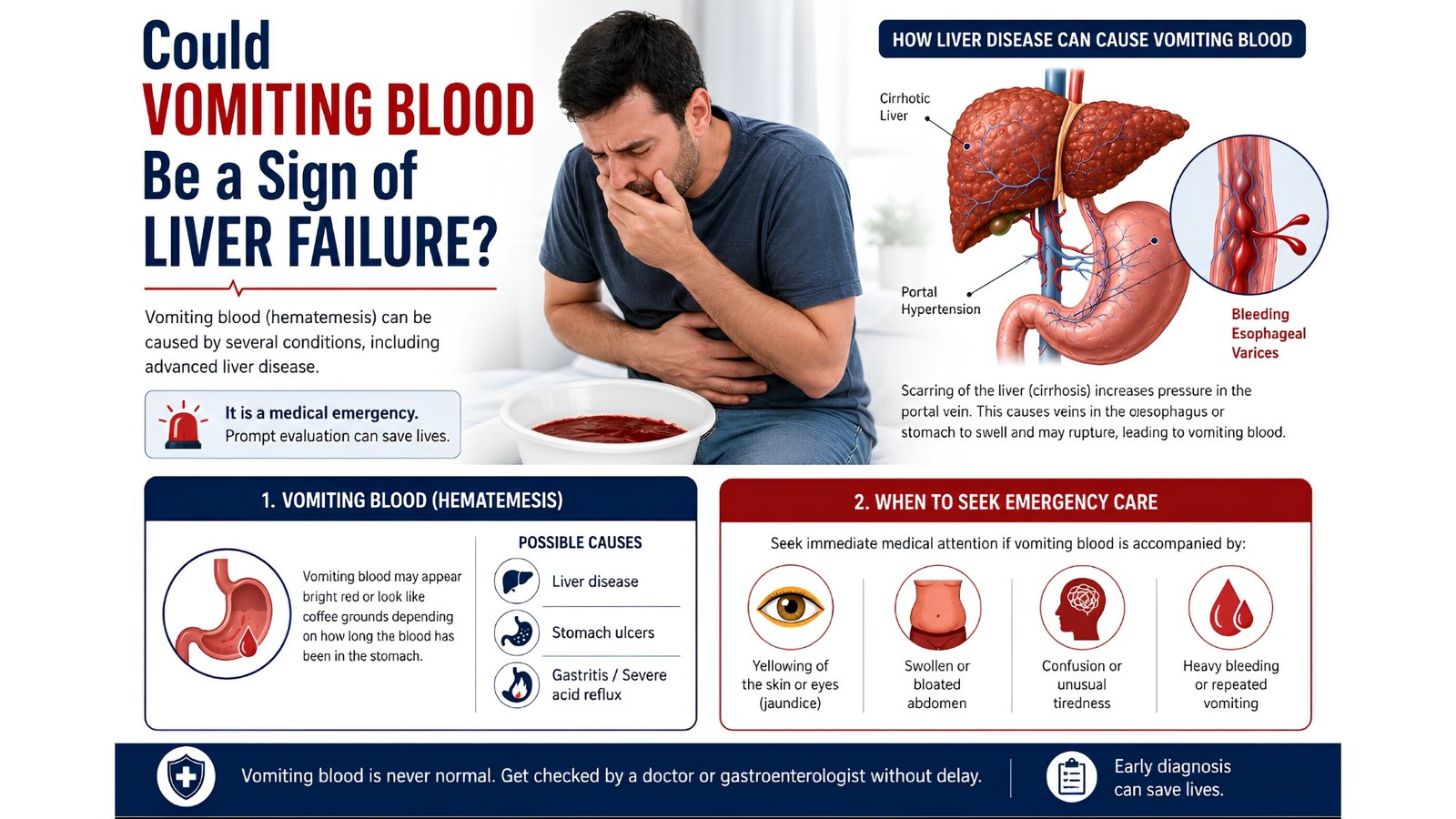
Doctors call this symptom “hematemesis”, a fancy word that simply means throwing up blood. It can look bright red, or sometimes more like dark coffee grounds, depending on how long the blood has been in your stomach.
This symptom always deserves attention. It’s your body’s way of saying something is bleeding somewhere along your digestive tract, and the liver is one possible source, but not the only one.
How Is the Liver Connected to This?
Here’s the link that catches people off guard: when the liver is badly damaged from long-term conditions like cirrhosis, fatty liver disease, or chronic hepatitis, blood has a harder time flowing through it normally.
This backup of blood flow puts pressure on nearby smaller veins, especially in the oesophagus and stomach. Over time, these veins can swell up like overinflated balloons. Doctors call these “varices.” When one of these swollen veins bursts, it can cause sudden, heavy vomiting of blood.
In medical terms, this is a serious complication of advanced liver disease, not an early warning sign, but something that usually shows up once the liver has already been struggling for a while.
But It's Not Always the Liver
This is the part that gets overlooked, and it’s important for keeping things in perspective. Several other, more common conditions can also cause vomiting blood:
- Stomach ulcers
- Severe acid reflux or gastritis
- A small tear in the food pipe from violent vomiting or retching
- Overuse of painkillers like aspirin or ibuprofen
- Heavy alcohol use, even without liver damage
So vomiting blood doesn’t automatically mean liver failure. It means something needs to be properly checked out, and only a doctor can tell you which cause applies to you.
Signs That Point More Strongly Toward Liver Trouble
If liver disease is behind the bleeding, it rarely shows up alone. Watch for these accompanying signs:
- Yellowing of the skin or eyes (jaundice)
- A swollen, bloated belly
- Unusual tiredness or confusion
- Dark urine or pale stools
- Easy bruising
If vomiting blood happens alongside any of these, don’t wait it out at home. Head to the emergency room right away.
How Doctors Figure Out the Cause
Once you reach the hospital, doctors typically run a few quick checks:
- Endoscopy: a thin camera tube that looks directly inside your food pipe and stomach
- Blood tests: including liver function tests to see how well your liver is working
- Ultrasound or CT scan: to check the liver’s size, shape, and blood flow
This combination usually gives a clear picture within hours, not days.
When Liver Damage Becomes Severe
If repeated testing confirms advanced cirrhosis or liver failure, treatment shifts from just stopping the bleeding to managing the disease itself, medications, dietary changes, and procedures to reduce pressure in those swollen veins.
In the most advanced cases, when the liver can no longer recover on its own, a liver transplant becomes the definitive solution. Multi-speciality hospitals in Ahmedabad today are well equipped for complex transplant care, handling both liver transplant and kidney transplant procedures with experienced transplant teams, which matters, since patients with advanced liver disease sometimes have related kidney complications too.
Listen to Your Liver Before It Shouts
Vomiting blood is never something to brush off, and yes, it can be connected to liver failure, but it’s one possibility among several. The smartest move is the same either way: get checked promptly by a doctor or gastroenterologist rather than guessing at home.
As Dr Mayur Patel, a Liver Surgeon who regularly treats liver-related emergencies in Ahmedabad, puts it: “Most patients wait too long simply because the symptom comes and goes. But by the time someone is vomiting blood, the body has usually been signalling for a while; it’s just gotten louder.”