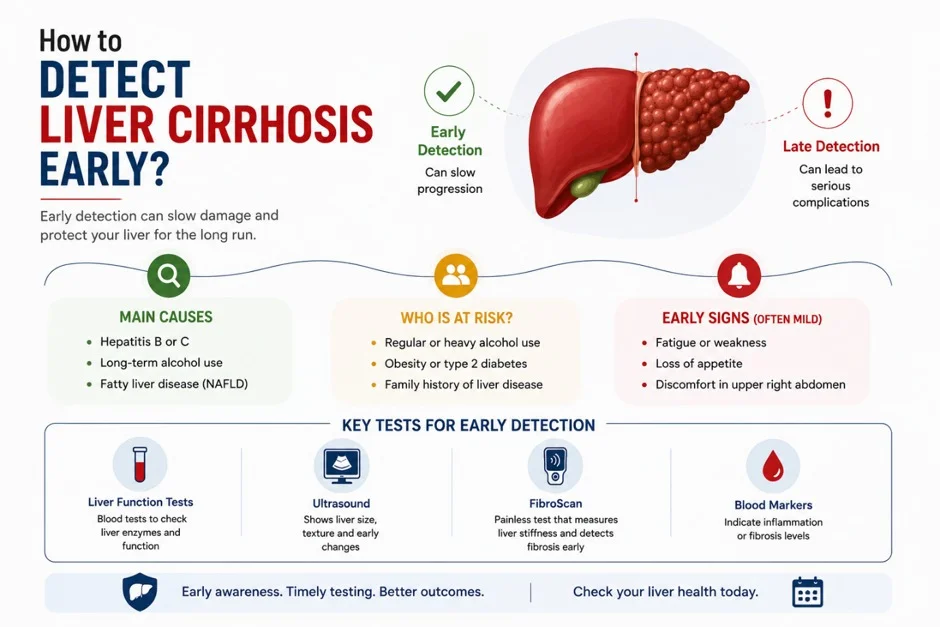
How to detect Liver Cirrhosis early?
Introduction
Liver cirrhosis rarely announces itself. There’s no single moment where you suddenly feel unwell; instead, the damage builds up quietly, often over years, before symptoms become noticeable. This is exactly what makes early detection of liver cirrhosis so important, and also why so many cases are picked up only when the condition has already progressed.
The encouraging part is that cirrhosis doesn’t happen overnight. It develops through stages, and if caught early, its progression can often be slowed or even stopped. Knowing what to watch for and which tests actually matter can make a real difference in protecting your liver health.
What Exactly Is Liver Cirrhosis?
Cirrhosis is the scarring of liver tissue that happens after long-term damage. Healthy liver tissue gets replaced by scar tissue, which makes it harder for the liver to function properly. Once scarring becomes extensive, it can affect blood flow, digestion, and the body’s ability to filter toxins.
The important thing to understand is that cirrhosis is usually the end result of years of ongoing liver stress, not a sudden event.
What Causes Liver Cirrhosis?
Several conditions can gradually lead to cirrhosis if left unmanaged:
- Chronic hepatitis B or C infection
- Long-term alcohol use
- Non-alcoholic fatty liver disease (NAFLD)
- Autoimmune liver conditions
- Prolonged bile duct blockages
- Certain inherited liver disorders
Understanding the cause behind cirrhosis is important because treatment often focuses on managing the underlying condition rather than the scarring itself.
What Symptoms Suggest the Condition Has Advanced?
If cirrhosis progresses further, more noticeable symptoms can appear, such as:
- Yellowing of the skin or eyes (jaundice)
- Swelling in the abdomen or legs
- Confusion or difficulty concentrating
- Dark urine or pale stools
- Spider-like blood vessels visible on the skin
If any of these appear, prompt medical evaluation becomes essential rather than optional.
Who Is Most at Risk of Developing Cirrhosis?
Certain factors increase the likelihood of liver scarring over time:
- Regular or heavy alcohol consumption
- Obesity or type 2 diabetes
- Untreated hepatitis B or C
- Family history of liver disease
- High cholesterol or triglyceride levels
- Long-term use of certain medications
If you fall into one or more of these categories, routine liver monitoring becomes especially valuable, even if you feel completely fine.
How Is Liver Cirrhosis Detected Early?
The good news is that several simple tests can pick up liver damage well before symptoms become obvious.
- Liver function tests (LFTs): Blood tests that measure liver enzymes and overall function.
- Ultrasound imaging helps assess liver size, texture, and early signs of scarring.
- FibroScan: A specialised, painless test that measures liver stiffness, often used to detect fibrosis early.
- Blood markers: Certain tests can indicate inflammation or fibrosis levels.
- Liver biopsy: Occasionally used for a more definitive diagnosis, though less commonly needed today.
Doctors often recommend a combination of these tests rather than relying on just one, since early-stage cirrhosis can sometimes be subtle even on imaging.
Prevention Tips for Long-Term Liver Health
Preventing cirrhosis is far easier than managing it once it develops.
- Get vaccinated against hepatitis A and B if you haven’t already.
- Limit alcohol intake, especially if you have existing liver risk factors.
- Maintain a healthy body weight and stay physically active.
- Schedule liver function tests as part of routine health check-ups.
- Be cautious with painkillers and unregulated supplements.
Early Awareness Protects the Liver's Future
Cirrhosis may develop silently, but it doesn’t have to go unnoticed. Understanding the early signs of liver cirrhosis, knowing your risk factors, and staying consistent with routine testing can make an enormous difference in outcomes. The liver is forgiving when given the chance, and early intervention often changes the entire course of the condition.
If you have risk factors for liver disease or have noticed any of the symptoms mentioned above, it’s worth getting evaluated sooner rather than later. Dr. Mayur Patel, liver surgeon in Ahmedabad recommends timely liver screening for anyone at risk, so that any damage can be identified early and managed effectively.