Can Fatty Liver Turn Into Liver Cancer?
Introduction
Fatty liver has quietly become one of the most common health findings in Ahmedabad today, often picked up during a routine ultrasound or a general health check-up. Many people see the words “fatty liver” on their report and wonder what it really means for their health in the long run.
So, can fatty liver turn into liver cancer? The honest answer is: not usually, and not overnight. In most cases, fatty liver is a manageable condition that responds well to lifestyle changes. But if it is ignored for years, it can slowly progress through several stages and, in some cases, raise the risk of liver cancer. Understanding this progression, and knowing which stage you’re at, can make all the difference between unnecessary worry and timely action.
What Exactly Is Fatty Liver?
Fatty liver simply means there is extra fat stored in your liver cells. A small amount of fat is normal. The problem starts when fat builds up beyond 5-10% of the liver’s weight.
There are two main types:
- Non-Alcoholic Fatty Liver Disease (NAFLD): Linked to obesity, diabetes, and poor diet, not alcohol.
- Alcoholic Fatty Liver Disease (AFLD): Caused by regular, heavy alcohol consumption.
Both types can follow a similar path if left untreated.
How Does Fatty Liver Progress Toward Cancer?
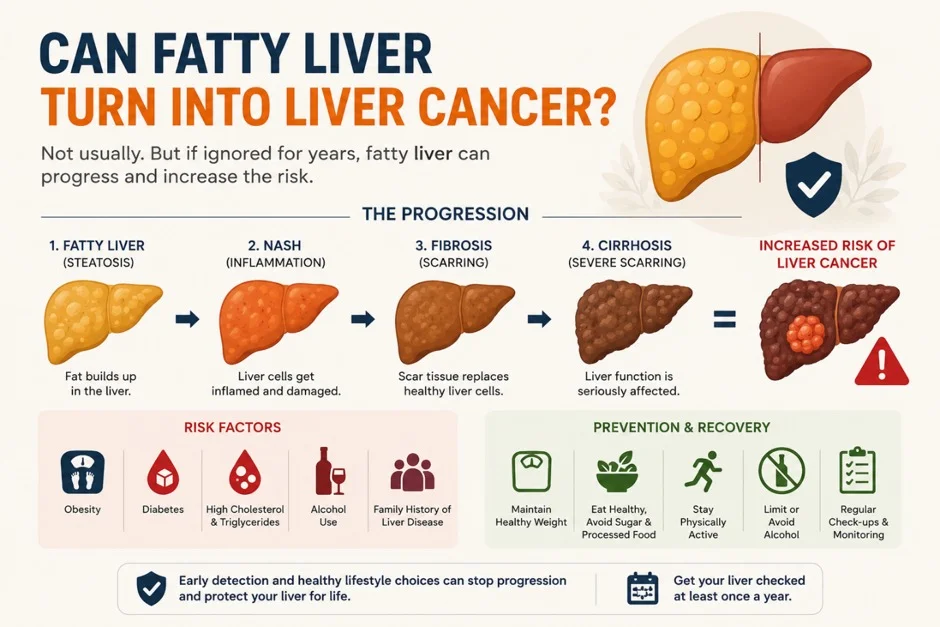
This is the part patients often don’t realise: fatty liver rarely jumps straight to cancer. It usually follows a slow, four-stage journey:
- Simple fatty liver (steatosis): Fat accumulates, but the liver still functions normally.
- Steatohepatitis (NASH): Inflammation sets in, and liver cells start getting damaged.
- Fibrosis: Scar tissue begins replacing healthy liver tissue.
- Cirrhosis: Extensive scarring disrupts liver function significantly.
It is mainly at the cirrhosis stage that the risk of liver cancer, specifically hepatocellular carcinoma, increases meaningfully. In other words, cancer isn’t a sudden outcome of fatty liver; it’s usually the result of years of unaddressed liver damage.
What Are the Warning Symptoms to Watch For?
Fatty liver is often silent in its early stages, which is exactly why regular check-ups matter. As the condition advances, you might notice:
- Persistent fatigue or low energy
- Discomfort or dull pain in the upper right abdomen
- Unexplained weight loss
- Yellowing of the skin or eyes (jaundice)
- Swelling in the abdomen or legs
- Loss of appetite
If any of these symptoms appear, especially alongside a known fatty liver diagnosis, it’s worth getting checked promptly rather than waiting.
Who Is Most at Risk?
Certain factors make the journey from fatty liver to more serious liver disease more likely:
- Type 2 diabetes or insulin resistance
- Obesity, particularly excess fat around the abdomen
- High cholesterol or triglycerides
- Regular or heavy alcohol use
- Family history of liver disease
- Chronic hepatitis B or C infection
Having one or more of these risk factors doesn’t mean cancer is inevitable. It simply means closer monitoring is a good idea.
How Is Fatty Liver Diagnosed and Monitored?
Diagnosis usually starts with a simple ultrasound, along with blood tests to check liver enzymes. If there are signs of scarring or inflammation, additional tests such as a FibroScan, CT scan, or, in some cases, a liver biopsy may be recommended.
Doctors often advise patients with fatty liver to get liver function tests done at least once a year, especially if they also have diabetes or a higher body weight. Early detection genuinely changes outcomes.
Recovery Tips: Can Fatty Liver Be Reversed?
Here’s the reassuring part: in its early stages, fatty liver is often reversible. The liver is a remarkably resilient organ.
- Lose weight gradually: Even a 7-10% reduction in body weight can significantly reduce liver fat.
- Cut down on sugar and refined carbs: These directly contribute to fat storage in the liver.
- Limit or avoid alcohol: This gives the liver a chance to heal.
- Stay physically active: Aim for at least 30 minutes of movement most days.
- Manage diabetes and cholesterol: Keeping these in check protects the liver directly.
- Avoid unnecessary medications or supplements: Some can add extra strain on the liver.
A Healthy Liver Is Built One Habit at a Time
So, can fatty liver turn into liver cancer? In rare, long-neglected cases, yes, it can progress that far. But for the vast majority of patients, fatty liver is a manageable and often reversible condition when caught early and treated with care. Awareness, not fear, is what protects your liver in the long run.
If you’ve recently been diagnosed with fatty liver or if you’re experiencing any of the symptoms mentioned above, don’t wait for things to worsen. Dr. Mayur Patel, liver surgeon in Ahmedabad, recommends a thorough liver health check-up and a personalised care plan to help you protect your liver for years to come.