How Does Alcohol Affect Your Liver?
Introduction
Most people enjoy an occasional drink without giving much thought to what happens inside their bodies afterward. But the liver, one of your most hardworking organs, is quietly doing all the heavy lifting. And when alcohol becomes a regular habit, that silent toll can turn into something far more serious.
Heavy drinking over many years rarely announces its damage loudly. By the time symptoms like fatigue, abdominal discomfort, or yellowing of the skin appear, the liver has often been struggling in silence for a while. Knowing what is happening inside the body is the first step toward protecting it or getting the right help before things progress further.
What Your Liver Actually Does
Before we talk about damage, it helps to appreciate how remarkable the liver truly is.
Your liver performs over 500 functions every single day. It filters toxins from your blood, produces bile to digest fats, stores energy as glycogen, and helps your blood clot properly. It is the only organ in your body capable of regenerating itself, but only up to a point.
When alcohol enters your bloodstream, the liver becomes its primary processing site. It breaks down alcohol using specific enzymes. This sounds straightforward, but alcohol metabolism creates harmful byproducts, particularly a toxic compound called acetaldehyde, that directly injures liver cells over time.
The Three Stages of Alcohol-Related Liver Disease
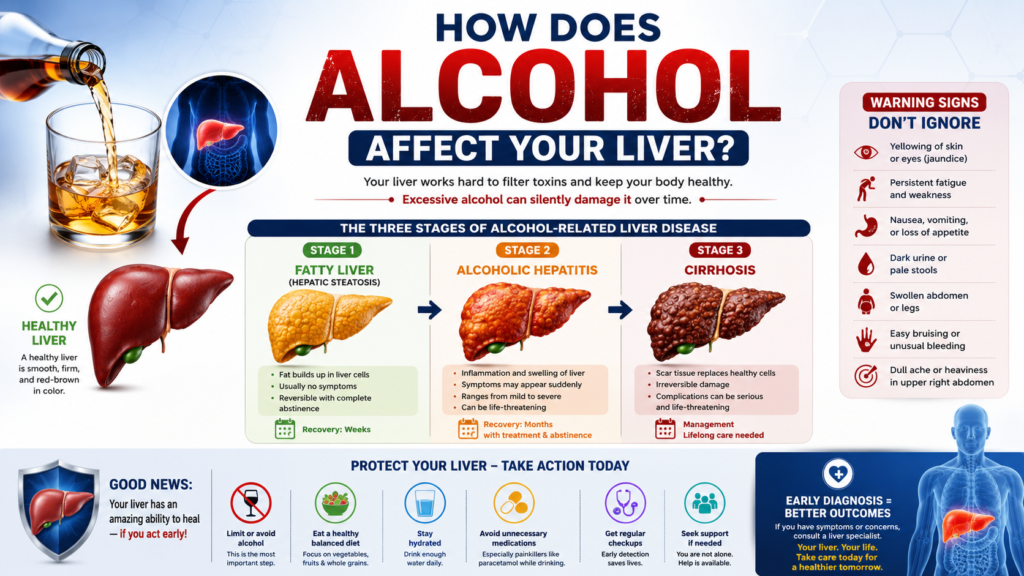
Liver damage from alcohol does not happen overnight. It progresses through distinct stages, and catching it early makes a significant difference.
Stage 1: Fatty Liver (Hepatic Steatosis)
Fatty Liver is the earliest and most reversible stage. When you drink, your liver prioritizes breaking down alcohol over processing fats. As a result, fat starts building up inside liver cells.
The good news? If you stop drinking at this stage, the liver can often recover completely within a few weeks. Many people at this stage have no symptoms at all, which is why routine checkups matter.
Stage 2: Alcoholic Hepatitis
This is where things become more serious. Continued drinking leads to inflammation and swelling of the liver. Symptoms can appear suddenly and may include:
- Yellowing of the skin or eyes (jaundice)
- Nausea and vomiting
- Fever and abdominal pain
- Loss of appetite and rapid weight loss
- Feeling extremely tired or weak
Alcoholic hepatitis ranges from mild to severe. In its most severe form, it can be life-threatening and may require hospitalization. Some patients recover with abstinence and medical support; others may develop long-term complications.
Stage 3: Cirrhosis
Cirrhosis is the most advanced and irreversible stage. Years of repeated injury cause healthy liver tissue to be replaced by scar tissue (fibrosis). A scarred liver cannot perform its normal functions effectively.
Complications of cirrhosis can include:
- Fluid accumulation in the abdomen (ascites)
- Internal bleeding from enlarged veins in the esophagus (varices)
- Confusion or memory problems due to toxin buildup (hepatic encephalopathy)
- Increased risk of liver cancer
At the cirrhosis stage, management becomes complex. Depending on how much function the liver retains, some patients may eventually need a liver transplant evaluation.
Warning Signs You Should Never Ignore
Many people dismiss early symptoms as stress or a “bad patch.” Here are signs that your liver may be struggling and that you should see a doctor promptly:
- Persistent fatigue that does not improve with rest
- Swollen abdomen or legs
- Dark-colored urine or pale, chalky stools
- Skin or eyes turning yellow
- Easy bruising or unusual bleeding
- A dull ache or heaviness in the upper right side of your abdomen
Do not wait for these symptoms to worsen. Early diagnosis gives you far more treatment options.
Can the Liver Heal After You Stop Drinking?
This is one of the most common questions patients ask, and the honest answer is: it depends on the stage.
In fatty liver disease, the liver has a strong ability to heal, often within weeks of stopping alcohol completely. Even in mild to moderate alcoholic hepatitis, abstinence combined with medical treatment can lead to meaningful recovery.
Cirrhosis, however, cannot be fully reversed. But progression can be slowed significantly, and many patients with early cirrhosis go on to live well for years with proper medical care, lifestyle changes, and close monitoring.
The liver is resilient, but it has limits. The earlier you act, the better your chances.
How Alcohol-Related Liver Disease Is Diagnosed
If your doctor suspects liver disease, they will likely recommend:
- Blood tests to check liver enzyme levels (ALT, AST, bilirubin)
- Ultrasound or CT scan to look at the liver’s size, texture, and blood flow
- FibroScan (a non-invasive test) to measure liver stiffness and scarring
- Liver biopsy, in some cases, where a small tissue sample is examined under a microscope
Early detection through these tests can make a genuine difference in outcomes.
Practical Steps to Protect Your Liver Right Now
Whether you are concerned about your own drinking habits or supporting a family member, these steps can make a real difference:
- Reduce or eliminate alcohol consumption. This is the single most impactful change you can make
- Stay hydrated and eat a balanced diet rich in vegetables, lean proteins, and whole grains
- Avoid self-medicating with over-the-counter painkillers like paracetamol (acetaminophen) while drinking this combination is particularly hard on the liver
- Get regular checkups, especially if you have a history of heavy drinking
- Seek support if you are finding it difficult to cut back on addiction support services, and counseling can be genuinely life-changing
One Decision Can Make All the Difference
Alcohol and liver health are closely connected, and understanding that relationship is powerful knowledge. From fatty liver to cirrhosis, the progression of alcohol-related liver disease is real, but so is the potential for recovery, especially when caught early.
If you are experiencing any symptoms or if you simply want a clear picture of your liver health, please do not delay seeking medical advice. For personalized guidance, advanced diagnosis, and expert surgical care when needed, you can consult Dr. Mayur Patel, a trusted and experienced Liver Surgeon in Ahmedabad. Early conversations with the right specialist can genuinely change your health outcomes and your life.
Your liver has been working hard for you. Give it the attention it deserves.