
Liver Transplant: A Complete Guide to the Journey from Evaluation to Recovery
Introduction
Getting a diagnosis that requires a liver transplant can feel overwhelming — for the patient and for the family standing beside them. Questions flood in all at once. Will I be okay? What happens next? How long will recovery take? These are real, valid fears, and you deserve clear, honest answers.
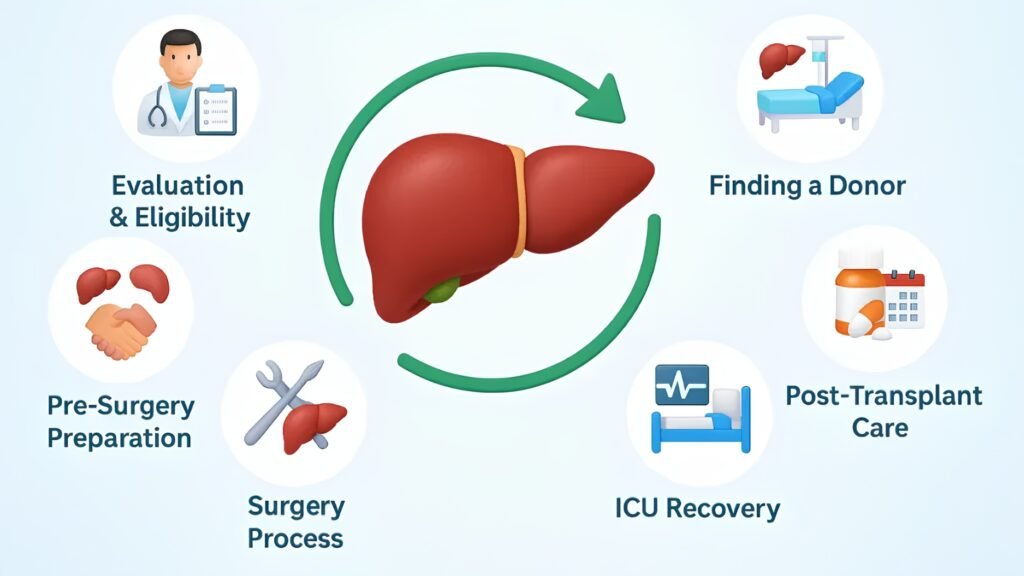
This guide walks you through every stage of the liver transplant journey — from understanding why it becomes necessary, to what life looks like on the other side of surgery.
What Causes Liver Failure? A Simple Guide for Patients
The liver is a tough organ. Every day it cleans your blood, helps digest food, stores energy, and keeps your body running. But some conditions damage it so badly that it simply cannot recover.
The most common reasons the liver reaches this point include:
- Cirrhosis — permanent scarring caused by years of damage, usually from heavy alcohol use or long-term hepatitis
- Hepatitis B and C — viral infections that slowly destroy liver cells, often without early symptoms
- Fatty liver disease (NAFLD) — a growing problem linked to obesity and diabetes, where fat builds up inside the liver
- Autoimmune hepatitis — the body’s own immune system mistakenly attacks the liver
- Primary biliary cholangitis (PBC) — a condition where the bile ducts inside the liver get damaged over time
- Sudden liver failure — a rapid breakdown of liver function, sometimes triggered by a medication overdose or severe infection
- Inherited conditions — diseases like Wilson’s disease or hemochromatosis that are passed down through families
Once the liver is too damaged to keep up with the body’s needs, a transplant is often the only real path to survival.
Recognizing the Warning Signs
Liver disease is often called a “silent” illness because it progresses slowly, with symptoms appearing only once significant damage has occurred. Still, there are signs that should never be ignored:
- Yellowing of the skin or eyes (jaundice)
- Persistent fatigue that doesn’t improve with rest
- Swelling in the abdomen or legs
- Dark-colored urine or pale stools
- Itchy skin without an obvious cause
- Confusion or difficulty concentrating (a sign of hepatic encephalopathy)
- Easy bruising or unexplained bleeding
- Nausea and significant unintended weight loss
The Evaluation Process: Your First Big Step
Before anyone is approved for a transplant, they go through a thorough medical evaluation. This isn’t just paperwork — it’s the foundation of a safe and successful outcome.
What the Evaluation Involves
The transplant team assesses your overall health to confirm a transplant is both necessary and safe. This typically includes:
- Blood tests to measure liver function, kidney health, and blood type
- Imaging scans (ultrasound, CT, or MRI) to study the liver’s structure and blood supply
- Cardiac and pulmonary tests to ensure your heart and lungs can handle surgery
- Nutritional and psychological assessments
- Screening for infections or cancer that could affect transplant outcomes
The MELD Score
Your MELD score (Model for End-Stage Liver Disease) is a number calculated from your blood results. It reflects how urgently you need a transplant. The higher the score, the higher your priority on the waiting list. Understanding this score helps set realistic expectations about timing.
Finding a Donor: Living vs. Deceased Donation
Liver transplants can come from two sources.
Deceased donor transplants use a portion or the full liver from someone who has passed away and consented to organ donation. Waiting times vary depending on blood type, body size, MELD score, and availability.
Living donor transplants involve a healthy adult — often a family member — donating a portion of their liver. Because the liver regenerates, both the donor’s and recipient’s livers grow back to near-normal size within months. This option often reduces waiting time significantly and allows for better surgical planning.
Recovery: The Long Road Worth Taking
Recovery after a liver transplant is a gradual process, and patience is genuinely part of the treatment.
Long-Term Recovery Tips
- Take medications exactly as prescribed — skipping doses puts your new liver at serious risk
- Eat a balanced, liver-friendly diet — focus on lean protein, vegetables, and whole grains; limit salt and processed foods
- Avoid alcohol completely — even small amounts can harm the transplanted liver
- Protect yourself from infections — your immune system will be intentionally suppressed, so hand hygiene and avoiding sick contacts matter more than ever
- Attend every follow-up appointment — early detection of complications is the best protection
- Rest without guilt — fatigue is normal in the first year, and rest is recovery
Your Next Step Towards Liver Health
A liver transplant is more than a surgical procedure—it is a carefully planned journey that begins with evaluation and continues through recovery and long-term care. With the right medical team, proper follow-up, and healthy lifestyle choices, many patients go on to lead active and fulfilling lives after transplantation.
If you are exploring treatment options for a Liver Transplant in Ahmedabad, consulting an experienced liver specialist such as Dr. Mayur Patel can help you understand your options and receive personalized guidance throughout the transplant journey.